Memorial Day tends to make me reflective.
As Americans, there is so much to be thankful for. We are blessed. We live in one of the most unique nations in human history…and one of the most diverse nations to ever be born. We are joined together by a creed not an ethnicity.
We hold these truths to be self-evident, that all men are created equal, that they are endowed by their Creator with certain unalienable Rights, that among these are Life, Liberty and the pursuit of Happiness.
An estimated 1.3 million Americans have died in defense of these God-given unalienable rights.
That is what makes Memorial Day a day in which all of us should be thankful.
But recently, while reading about the history of Memorial Day, I noticed that half of these 1.3 million deaths occurred in the Civil War.
An estimated 655,000 soldiers died in the Civil War. This is more than the total of all the other wars combined. More than the Korean War (36,000), Vietnam (58,000), World War I (116,000), and World War II (405,000).
We were more effective at killing each other than defending ourselves against foreign enemies.
Sad.
And, unfortunately, the same spirit of the Civil War seems to be pervading our nation again. We are more divided now than we have been since that time. And we seem to be running headlong toward pulling the seams further apart.
What is going on? What is happening in our culture? Why have we reached a point where we seem to hate each other more than we seek the good of each other…and the good of our nation?
Three names come to my mind today.
Marx. Trump. Jesus.
 MARX
MARX
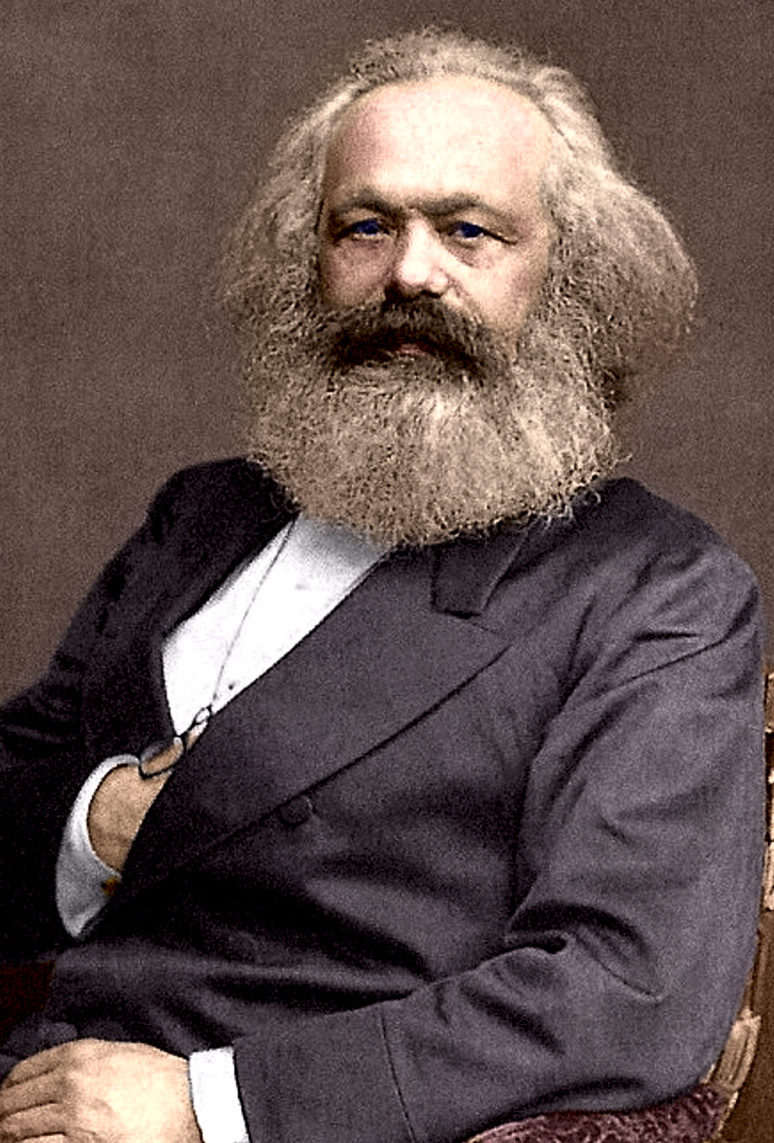
Why do I bring up Karl Marx? Because I believe that the philosophical undercurrent underneath our current cultural moment is a form of Marxism.
By all accounts, Karl Marx (1818-83) was a miserable man. A heavy drinker and smoker. Angry. Vindicative. Miserly. He had an intense hatred for his father, for his background as a Jew, for his religion as a Christian, for himself. He was generally unkempt. A loner who rarely washed his hair, bathed, or changed his clothes. His home was a hazardous wreck. His son appears to have died of neglect. Two of his daughters committed suicide. Marx himself died at the age of 64 with numerous health issues (many self-inflicted). Only eleven people attended his funeral.
He is not the model of health…physically, emotionally, relationally, or spiritually.
Yet his philosophy and his writings have impacted the world and continue to do so. And not in a positive way. Lenin. Stalin. Mao Zedong. Castro. Pol Pot. Some have estimated that 100 million people have been killed due to Marxist ideologies.
Yet Marxism is still alive and well.
At the core of Marxist thinking is the idea of class struggle. At the beginning of the Communist Manifesto, Marx wrote these words:
The history of all existing society is the history of class struggles.
In the simplest of terms, Marx divided all of history…and all of society…into a war between the powerful and the weak, the rich and the poor, the bourgeoisie and the proletariat, the oppressor and the oppressed.
Marx’ goal was to incite the oppressed to rise up in revolution and destroy the oppressor.
In fact, Marx wanted to see all the structures of society destroyed. What drove him was not a utopian dream as much as an intense hatred for God and the “powers that be.”
I wish to avenge myself against the One who rules above. …Then will I wander godlike and victorious through the ruins of the world and, giving my words an active force, I will feel equal to the Creator.
Marxist ideology is built on destruction. The enemy is the “other.” Destroy them at any cost. Destroy the systems around them too. It is an ideology that feeds our selfish human tendency toward hatred, towards victimization, towards finding someone else to blame for our problems.
Marxism wants anger, division, and revolution to grow in a society…whatever the cost.
 TRUMP
TRUMP
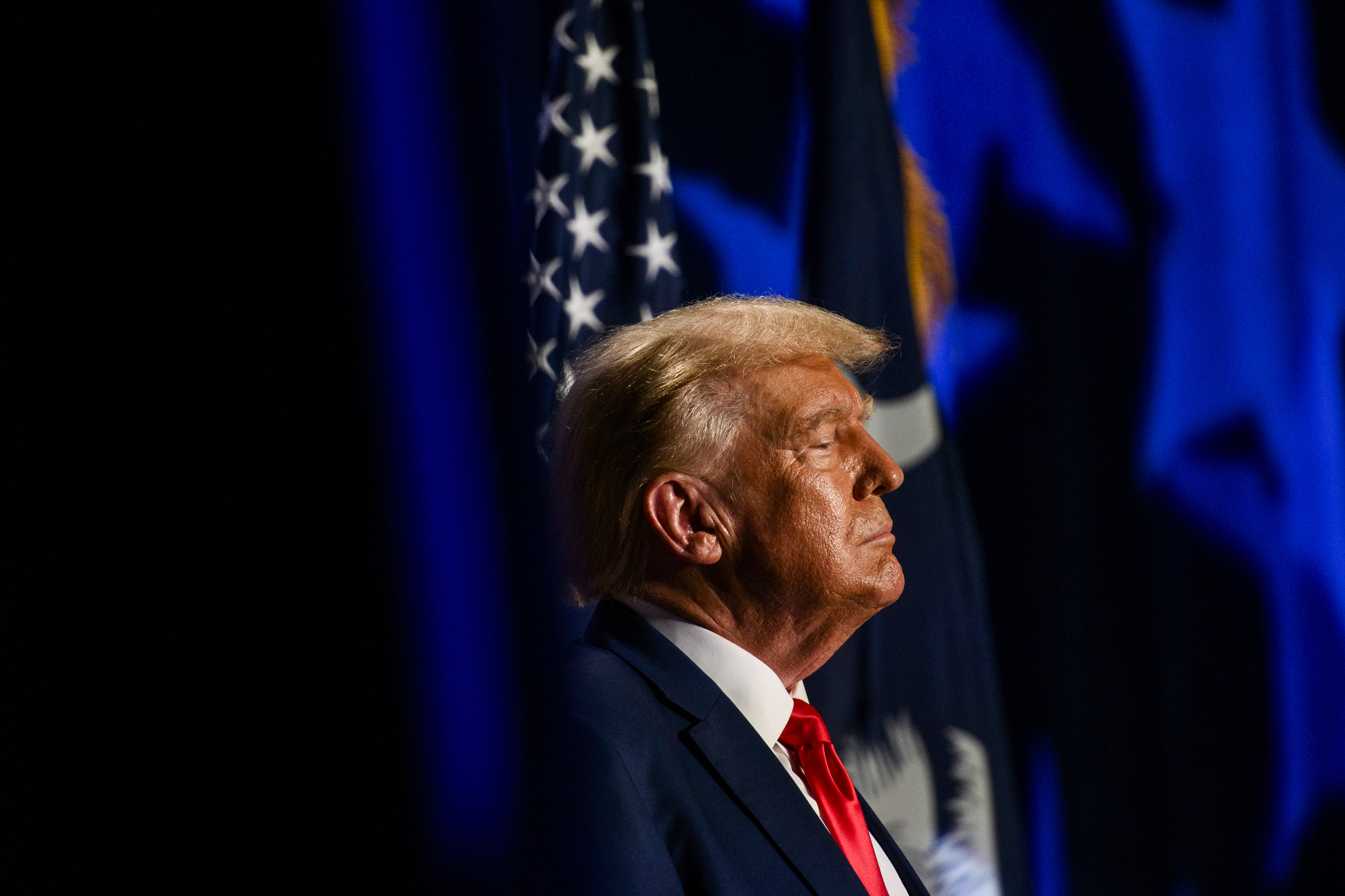
Just bringing up the name “Trump” creates a visceral reaction in most people. You either hate him or you love him. You either have “Trump Derangement Syndrome” or some kind of quasi-religious devotion to him as the “savior” of America.
It is really strange.
But Trump’s persona seems to feed this dichotomy. He seems to even want it at times. Perhaps, in his mind, whether you love him or hate him, you are still thinking about him…and thus, feeding his ego.
And I am not trying to make a political statement here. Whether you like Trump or hate him is really not my point. It is the fact that his presidency has exposed the growing division that was already present in our culture.
I have been alive long enough to see the division grow over the past 50 years. It seems like, with each successive president, the hatred toward “the other side” becomes more and more palpable. The rise of social media has only furthered this divide. And Trump is the culmination as the “Social Media President.”
Trump is not a Marxist…nor a socialist or communist for that matter. He is perhaps as far away from these ideologies as any president in recent memory. I am not sure how deep Trump’s political convictions go, but I really do believe he loves America…or at least his perception of it. After all, this nation has made his family prosperous and powerful. He wants America to return to its former glory (i.e., MAGA). There is a good, patriotic element to his motivation, even if you disagree with his methods.
And it is his methods that are the focus of my concern. Though Trump is an “anti-Marxist” in policy, he is very similar to a Marxist in mentality.
What do I mean by that?
Marxism is rooted in a power dynamic. “A will to power,” as Nietzsche might say. A desire to deride, debase, demonize, dehumanize, defeat, and destroy one’s political enemies.
Consider this description of Karl Marx by Carl Schurz (1829-1906), a contemporary of Marx and later an immigrant to the US and an elected Republican Senator:
Never did I meet a man of such offensive arrogance in his demeanor. No opinion deviating in principle from his own would be given the slightest consideration. Anybody who contradicted him was treated with barely veiled contempt. Every argument which he happened to dislike was answered either with biting mockery about such pitiful display of ignorance, or with defamatory suspicions as to the motives of the interpellant. I still well remember the sneering tone with which he spat out the word “bourgeoisie.” He denounced everybody who dared to contradict his views.
Substitute “Democrat” for bourgeoisie in the above quote and I think you will get the picture.
Marx wanted to destroy his enemies at any cost. Trump is simply the other side of the coin.
And that is why I contend that, though diametrically opposed, MAGA-influenced conservatives and Marxist-influenced liberals are still playing the same game.
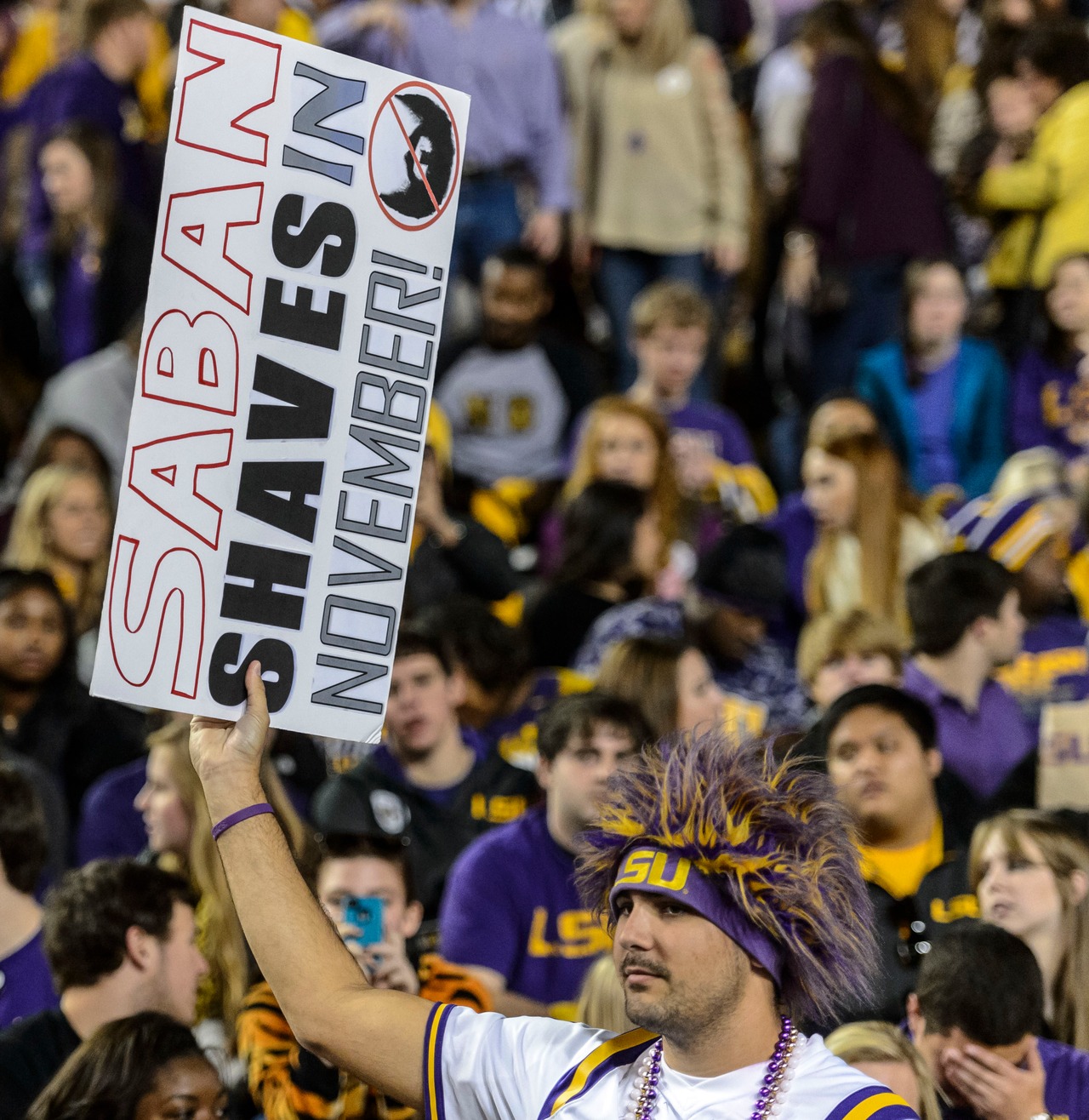
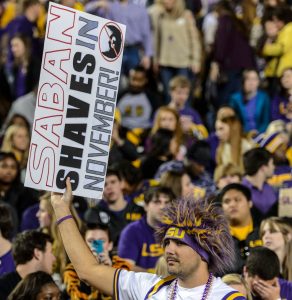 It is sort of like Alabama and LSU.
In the world of college football, these two teams are diametrically opposed. Their fans generally do not like each other. They are “sworn enemies” in the college football stratosphere. But though they may scorn each other, they are still functioning in the same league,. They are still playing on the same field. They are still locked in the same battle in the same game.
Though they may be seen as “enemies,” they are very much the same.
This is how I picture the “world of politics” today.
We may “hate” the other side…but we are still playing the same game.
And no matter what side of the aisle we may land, we all are caught up in it.
We are all breathing “Marxist air” whether we want to admit it or not.
Here is what Carl Trueman said in his magnus opus, The Rise and Triumph of the Modern Self:
In regarding all history as a political struggle determined by economic relations, Marx makes all intentional human activity political. Everything, from religious organizations to the structure of the family, is politicized. There is no private, prepolitical space in Marx’s world. And that is now basic to the world of today, where all things are politicized, from kindergartens and Girl Scout troops to adoption agencies, sports teams, and pop music.
When we see everything through a political lens, when we feel like the most important thing in the world is to “get our guy in power,” when we get angry at “the other side” and long for them to be destroyed, then we have adopted a Marxist mindset no matter how much we may say we hate it.
Trying to defeat a Marxist ideology with a Marxist methodology is still a Marxist victory.
 We are like the red-faced parent shouting at the top of her lungs over the rising clamor of her squabbling child,
“STOP SCREAMING, YOU CRAZY KID, OR I WILL GIVE YOU SOMETHING TO REALLY SCREAM ABOUT!!!!”
She may think that she is addressing the problem but, in reality, she is adding to it.
Welcome to politics in America.
JESUS
So what does Jesus have to do with all this mess? And specifically, what does He have to do with Marx and Trump?
In a word…EVERYTHING!
Whether you are pro-Marxist or anti-Marxist, whether you absolutely love Donald Trump or despise him with a passion, you are still somewhere on the same horizontal axis. You are still operating in the same paradigm, assuming the same rules of power.
Imagine a world leader coming from another part of the globe where real life and death are constantly on the line and seeing the animosity between Alabama and LSU football fans. He would think that such animosity is petty, insignificant, and even incomprehensible.
That’s how I think Jesus sees our political battles.
Every political group on earth at the time of Jesus tried to label Him, bridle Him, buckle Him to their own agenda. The religious conservatives (Pharisees), the elite progressives (Sadducees), the ultra-nationalists (Zealots), the political opportunists (Herodians), the apocalyptic isolationists (Essenes), and the cultural conformists (Hellenists) all tried to make Him their own or attack Him as “one of the others.” But Jesus didn’t fit into any of their categories. He exceeded them all. He exploded them all.
Jesus confronts every philosophy, ideology, leader, politician, and political party.
Jesus confronts us all.
If you can read the Gospels and not be convicted, confronted, and cornered by Jesus, then you are not reading them correctly. You may be reading them to gain ammunition for your political fight or to convince yourself that Jesus is “on your side,” but, in reality, Jesus stands above us all.
He does not bow to our political whimsies.
We bow to Him.
Ultimately the dividing line is not between the rich and the poor, the powerful and the weak, the oppressor and the oppressed. The dividing line is between Jesus and everyone else.
Jesus…and the rest of us.
Jesus…and you and me.
He is righteous. We are not.
He is holy. We are not.
He is morally perfect. We are not.
He is Lord. We are not.
Think about it. Unless there is a Lord above us all…a Truth above us all…a righteous Law governing us all…then we will all continue to fight for power, point the finger, puff up our pride, promote our “tribe,” and pummel our opponents.
It is only the recognition of a higher authority that leads to a deeper humility.
And it is only a deeper humility can ever lead to a greater unity.
And that is what gives me hope on a day like Memorial Day.
My hope is not in politics…or in the president…or in the next policy that passes through Congress…or in the next election that puts my preferred person in power.
My hope goes deeper and further than that.
My hope is in the One Person who can defeat our true enemies, conquer death, and change the human heart. More importantly, the One who can change my heart…teaching me to love “the other,” even the one who could be called my enemy.
In a world of growing division, there is only one Healer.
And His name is Jesus.
And that is worth remembering on Memorial Day.
O Lord, heal our land.

 In May 2001, Liz and I were living in New Jersey. Some friends of ours wanted to take us on a dinner cruise in the New York harbor. We arrived early enough to walk along the water and admire the skyline of New York City. They snapped a picture of us in front of the Twin Towers. That picture still sits on our mantle to this day. It reminds us how quickly life can change, how uncertain the future can be, how never to take one day for granted.
 We ended our staff meeting early and found a TV. We turned it on and sat mesmerized at the screen. We could not process what we were seeing. It made no sense. It seemed surreal. Was this literally happening in a city 40 miles from where we were sitting? When we went outside, we could see the smoke plume of burning buildings beginning to form in the sky.